I have come to discover that the weight of waiting is far less heavy than the weight of settling. And settling for anything less than true hope will leave us measuring God’s faithfulness by our fulfilled expectations rather than by His promises, secured for us at the cross and vindicated by the empty tomb.
Romans 15:13 says,
May the God of hope fill you with all joy and peace in believing, so that by the power of the Holy Spirit you may abound in hope.
Paul does not simply tell us to be hopeful; he calls God the God of hope. Which means true hope is not an emotion we produce or something exhausted hearts must manufacture. It has a Source. And perhaps this is where hope begins to abound: when we stop demanding it from our own weary hearts and instead receive it from the One who can fill what seems empty and sustain what feels too fragile to hold.
This does not mean unanswered prayers stop hurting. Durable hope does not ask us to call pain good, tell our hearts to mind their manners, or pretend the ending of the story does not matter. The things we carry matter deeply to God—the longings we have whispered about for years, the prodigals framed on our refrigerators, the needs that follow us into the grocery store and the school pickup line and the quiet hours after everyone else has gone to bed.
There are, even now, impossible and heart-wrenching things I am asking God to do. God-I-need-You-to-move-now things. And I am continuing to learn that durable hope does not require me to stop asking or aching; rather, it teaches me where to bring both: back into the presence of God…
There, I can grieve and believe. I can contend and surrender. I can await and abide. I can thank God and still whisper, “How long?”
This is the strange and holy tension of durable hope; it makes room for both desire and dependence. And perhaps this is what Paul is getting at when he says, “the God of hope fills us with joy and peace in believing.” Not that every answer will arrive the way we pray for it to, but that our hearts can become so rooted in the Source of hope that the answer itself is no longer asked to carry the full weight of our faith. And maybe the joy and peace he describes are not signs that we have stopped longing for the answers. Perhaps they are the quiet evidence that our longing has found somewhere sturdier to rest.
And when our hope is resting in Jesus rather than in a resolution, even our stagnant dreams and unanswered prayers can become worship—an offering from the heart that says, “Praise the Lord.”
And perhaps this is where our hallelujah becomes most honest. Not in the brightness of resolution, but in the dark where we are still waiting, still longing, still choosing to believe that God is not merely the giver of the answer, but the Answer Himself. More than the outcome we ache for, more than the miracle we hope to receive, He is the prize.
And that kind of knowing gives rise to a different kind of worship. The kind of worship that has no resolution to point toward yet. No tidy testimony. No visible evidence that morning is about to break. The kind that rises in the midnight places where disappointment and faith somehow learn to occupy the same heart.
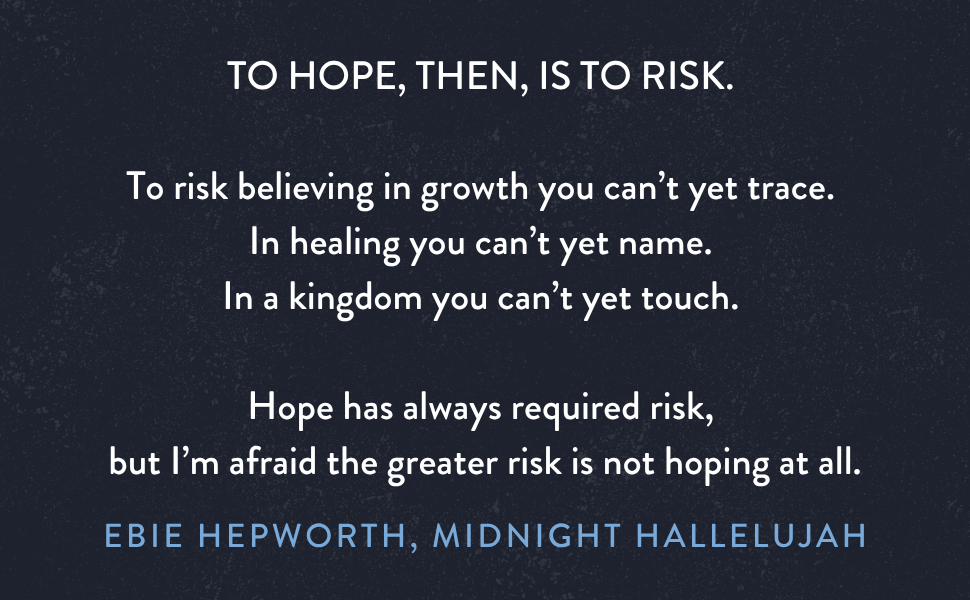
Perhaps that is why hope will always feel like a risk.
To risk hope again and again after disappointment is profoundly vulnerable.
To continue praying and believing while being met by silence asks something of us. No, it asks everything of us. To keep trusting the heart of God when we cannot trace His hand is one of the most costly forms of faith. But perhaps the greatest risk is placing our hope anywhere else.









No comments:
Post a Comment