The Power of a Prayer Walk
|
|
|
|
Today's inspiration comes from:
|
|
|
|
|
Today's inspiration comes from:
|
|
|
|
|
During my season of change, I craved walks around my neighborhood like a pregnant woman craves ice cream. I couldn’t explain it, I didn’t understand it, but I just needed to walk and walk and walk. So, most mornings I would walk around the neighborhood, taking the longest route possible. And in the evenings, I would do the same. Sometimes I’d take the dog with me, but most of the time I wanted to walk alone.
Later in my journey my therapist told me about a technique called eye movement desensitization and reprocessing (EMDR). He explained that this therapeutic method was discovered in 1987 when Francine Shapiro was walking in the park. She was walking around a small lake when she noticed that eye movements while walking appeared to decrease the intensity of unpleasant emotions. She began experimenting by helping war veterans with PTSD and simulating the same eye movements she experienced while walking. The results were astounding. The bilateral stimulation activates both sides of the brain with the shifting eye movement.1 This stimulation helps you process painful memories, like opening up an old file in your computer, editing it with truth, and filing it away again. My cravings for walking started to make sense.
I’ve since discovered that three minutes a day of walking will cause blood pressure to decrease, twenty minutes outside improves mood, and ninety minutes outside can reduce the number of depressive thoughts.2 Walking also helps your brain. Regular walking has been shown to increase the size of the hippocampus, a region linked to memory and learning.3 Steve Jobs was famous for holding “walking meetings,” because he believed walking helped with creativity and clarity. Some of his biggest decisions were made during these walks. It turns out Steve was right; one Stanford study found that people were up to 60 percent more creative when walking than sitting.4 Sounds in nature, like rustling leaves or singing birds, have been shown to reduce cortisol levels and improve attention, so there’s added benefits for those who opt to walk outside rather than on a treadmill.5
Comedian Ryan Hamilton joked on The Tonight Show, “I think it’s going to baffle historians. ‘What happened to these people? They just stopped. We’re not sure. They kind of slowly coalesced into a gel, and that was it for them. We have evidence that they were actually counting their individual steps one at a time. That’s how little they were moving.’”6
One health influencer recently joked, “So I invented this thing called walking.” After everything else failed to help her manage perimenopause symptoms, she started walking (with and without a weighted vest), and she swore by the results. Maybe we are looking at all the latest and greatest trends when all we need is to go back to the basics.
CS. Lewis described how a walk with his friend J. R. R. Tolkien around Magdalen College in Oxford deeply challenged and transformed his thinking about God and Christianity. Shortly after, he embraced faith in Christ.7 Some of the richest Christian theology and literature exist today because of C. S. Lewis, and it all started with a walk.
When we talk about our journey with God, we often refer to it as our walk with God. And maybe it’s not completely metaphorical. In Genesis 12:1 God called Abraham to move to “the land I will show you.” The Lord didn’t give Abraham geographical directions; the journey would require complete trust in God and a really long walk. In response Abraham packed his bags, gathered his family, and set out, awaiting further instructions from God. The first leg of Abraham’s journey was safe and watered, along the Euphrates River. The second leg went straight through the desert: no fishing, no predictability, dry. It seems like God wanted to show Abraham that He was near in the river seasons and near in the dry seasons, as long as they were walking together. And maybe that’s why it took so long for the Israelites to reach the promised land. Maybe God wanted to teach them about the slow pace of love and that life is about relationship, not about the destination.
In his book Three Mile an Hour God, Kosuke Koyama shared how Jesus walked from town to town, meeting people along the way. He lived a life of presence—not speed—attuned to interruptions, to the sick, to children, to the marginalized. His pace was and is intentional. Koyama’s point was this: God chooses to move slowly, because love takes time. He said, “Love has its speed. It is a spiritual speed. It is a different kind of speed from the technological speed to which we are accustomed. It goes on in the depth of life, whether we notice or not, at three miles an hour. It is the speed we walk and therefore the speed the love of God walks.”8
In the book of Luke, two men were debating and discussing the events pertaining to Jesus’s death, not realizing that it was He they were talking to.
As they talked and discussed these things with each other, Jesus Himself came up and walked along with them. — Luke 24:15
I wonder how many of us are too caught up in our own inner dialogues and debates (our minds full of the latest headlines) that we don’t even notice when God’s presence walks beside us to give us His perspective. If we’re moving too fast, we may miss wisdom from God, who refuses to be hurried.
I don’t think we can have an effective prayer life if we try to hurry through it all the time, which is why I love a good prayer walk. It forces me to slow down, notice the nature around me and thank God for it, and begin praying with the same unhurried cadence in which I walk. In years past I served with a pastor who paced while he prayed, and I couldn’t tell you what moved faster, his mouth or his feet. Everything was a big rush (because nothing is more urgent than demanding a move of God). That’s not the kind of prayer walking I’m talking about.
|
|
|
|
God’s presence walks beside us to give us His perspective
|
God’s presence walks beside us to give us His perspective
|
|
|
|
Here’s how prayer walking started for me. I started to take one thing that was burdening me—even if it was simply my mismatched emotions—and I would bring it to God while I walked.
My prayers were simple, and my pace wasn’t rushed. I would focus on putting one foot in front of the other, and I would say, God, I don’t know how to solve this, but I know You do, or God, I feel overwhelmed, but I know You are bigger. It became my daily act of providing space for my emotions to be in motion with God.
If you loved the science on the benefits of walking, you’ll appreciate these benefits of prayer. Dr. David H. Rosmarin, a clinical psychologist and Harvard Medical School professor, explained that prayer can soothe the nervous system, quiet the fight-or-flight response, and reduce emotional reactivity and anger.9 One study found that participants who engaged in repeating phrases like “God is love” experienced less anxiety and more tolerance to pain than those using secular or nonspecific sayings. Dr. Amy Wachholtz compared the mental effect of prayer to handing off a heavy backpack. “It lets you put down your burden mentally for a bit and rest,” she said.10
Research shows that structured rhythmic prayers regulate breathing to about six breaths per minute—an optimal pace for cardiovascular health and stress reduction.11 Prayer activates the parasympathetic nervous system (the “rest and digest” system), which can lower stress hormones, support immune balance, and improve emotional stability.12 And last but not least, prayer is shown to help with coping and promoting hope and a sense of meaning during hardship.13 When you partner the benefits of walking with the benefits of prayer, it’s a powerful combination. And not to mention what’s taking place in the spiritual realm when we invite Heaven to earth.
I will never ignore or underestimate the power of a prayer walk again. Whenever I feel the urge, I slip my shoes on and begin walking with God. Because there are files in my brain that need to be reopened and reprocessed, emotions that need to be put in motion, and burdens I try to carry on my own that are too heavy to carry alone. And if I want to experience and emulate the love of God in my life, I have to learn to walk at His pace, not mine.
Maybe you don’t feel like this is a slowdown season; maybe you’re up to your eyeballs in kids, bills, car lines, or projects at work. I know the feeling deeply, friend. Who has time to slow down, go on a prayer walk, or sit in God’s presence when the to-do list is a mile long? I get it. I always thought slowing down was a peaceful act, but what I’ve learned is that it’s also a battle strategy. It’s not always an act of peace; sometimes it’s an act of war. Sometimes you need to reclaim peace in your life boldly. Sometimes you need to fight for your joy resolutely. Sometimes you need to take back the territory that’s been taken from you. I know, it’s hard to go to battle when you feel like you need to be in triage. But some seasons require fighting with God’s supernatural strength, which is exactly why a prayer walk just might be the thing that saves your life.
The emotions from change fatigue can feel overwhelming and surprising at times. Trust me, I get it. But just like your season of transition is liminal, so are your emotions. Your feelings are not final. And when the emotions feel overwhelming, never underestimate the power of walking with God and surrendering every burden that feels too heavy for your heart to handle. Jesus gave you an invitation to rest when you’re weary when He said,
Walk with Me and work with Me—watch how I do it. Learn the unforced rhythms of grace. — Matthew 11:28–30 MSG
He didn’t promise to make all your emotions go away, but did you catch it? He invites you to walk with Him. He invites you to bring your weary heart and weary emotions to walk in step, and in motion, with him. It’s a powerful invitation.
|
|
|
|
Go on a prayer walk today. Slow down. Enjoy going at the Lord’s pace. Tell Him what’s on your heart and listen to the sounds as you begin to see His goodness and grace.
~ Devotionals Daily
|
|
|
|
Your prayer was answered. Now what?
|
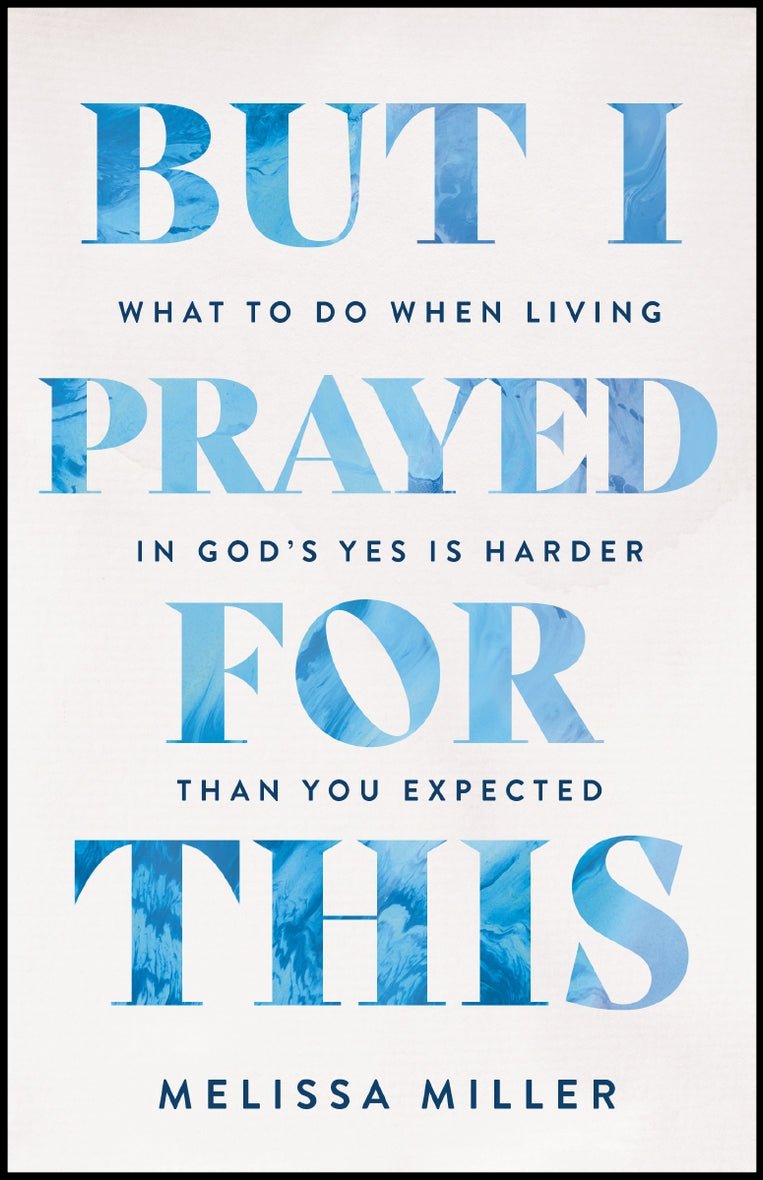
But I Prayed for This: What to Do When Living in God's Yes Is Harder Than You Expected
|
|
|
|
+ FREE shipping on all orders over $35
|
The spouse you prayed for is here, but a sadness sets in that you can't explain. The job you prayed for came through, but now you are overworked and overwhelmed. The baby you prayed for has arrived, but you haven’t slept since. You wonder, Isn't an answer to prayer supposed to feel better than this?
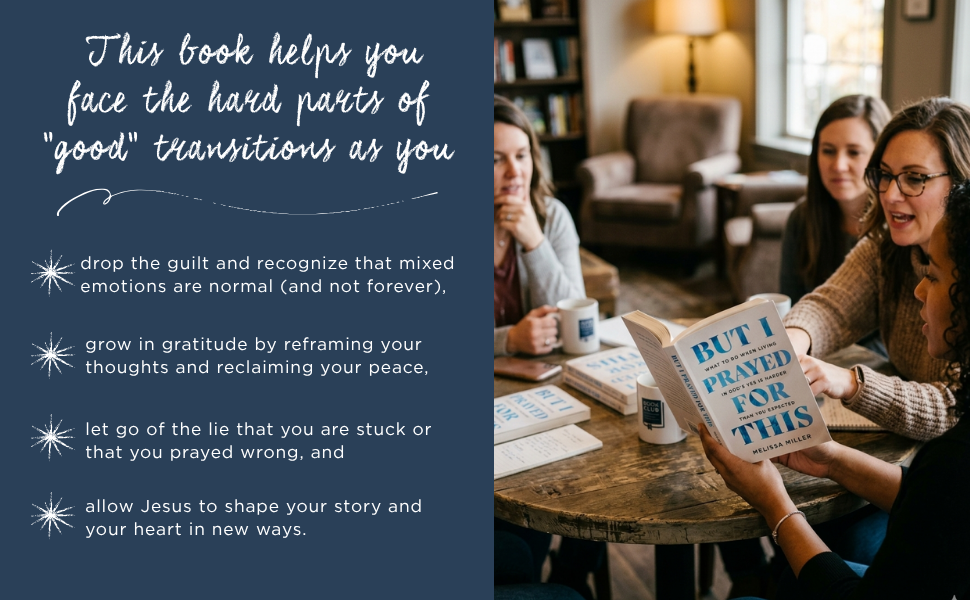
Melissa Miller knows the feeling. She prayed for a job opportunity across the country and wanted to grow her family through adoption, but she didn't expect to wake up every morning disoriented and wondering if God had picked the right person. She was tempted to push down her struggles because, after all, this is what she prayed for (and she didn’t want to seem ungrateful). Instead, she dove deep into Scripture, research, and therapy to learn how to keep showing up in a story that was different from what she'd imagined. In But I Prayed for This, Melissa helps you face the hard parts of "good" transitions as you:
- Drop the guilt and recognize that mixed emotions are normal (and not forever)
- Grow in gratitude by reframing your thoughts and reclaiming your peace
- Let go of the lie that you are stuck or that you prayed wrong
- Allow Jesus to shape your story and your heart in new ways
|
|
|
|
But I Prayed for This provides a pathway to care for your soul, permission to be in process, and reassurance that God's love is big enough for both your gratitude and your grief.
|
|
|
|
A Woman's Guide to Praying the Scriptures
|
|
|
Praying the Names of God for 52 Weeks
|
|
|
|
Be Still & Know Devotional Adult Coloring Book
|
|
|
NIV, Spiral-bound
Illustrating Bible
|
|
|
|
Song of Songs Online Bible Study
|
Discover the divine love story written for us.
In the Song of Songs Online Bible Study, Bible teacher Lisa Harper unveils an eye-opening truth: This ancient, often-misunderstood book that sometimes reads like a racy romance novel is actually a passionate declaration of our Creator Redeemer's relentless love for His people.
With her signature blend of humor, deep biblical insight, and raw vulnerability, Lisa peels back the layers of history and allegory to reveal Jesus as the Divine Bridegroom who didn't just come to deliver us—He delights in us!
Join the Song of Songs Online Bible Study and get access to 7 teaching videos and other helpful tools—all FREE when you sign up!
|
|
|
|
this devotion with someone who needs it today
|
|
|
|
*Offer valid until August 25, 2026 at 11:59 p.m. CST or while supplies last. Offer valid online and by phone only. Take an additional $5 off your purchase of $35 or more, after promotions and discounts and before shipping and handling costs are applied. Shipping, gift cards, or customization of products does not qualify towards minimum purchase requirements. Receive free standard ground shipping on non-rush orders of $35 or more, valid within the 48 continental United States or to an FPO/APO address; offer does not apply to Alaska, Hawaii, the U.S. Territories, rush orders, or expedited shipping methods. Offer only available to customers in the United States age 18 and older. To redeem offer, enter promo code REFRESH during online checkout or provide the code to a representative during phone orders. Cannot be redeemed for cash or combined with any other discount offer. FaithGateway reserves the right to de-activate the promo code in the event of fraud or technical issues and limit quantities of individual items eligible for purchase with this discount. Void where prohibited, taxed or restricted by law. Not valid for resale.
|
|
|
|
|










No comments:
Post a Comment