The Story of Seven Sneezes:
The Powerful Bible Passage Behind the Hymn, “It Is Well With My Soul”
|
The Story of Seven Sneezes: The Powerful Bible Passage Behind the Hymn, “It Is Well With My Soul”
|
|
|
|
Today's inspiration comes from:
|
|
|
|
|
Today's inspiration comes from:
|
|
|
|
|
Editor's Note: Enjoy today's devotion written for Devotionals Daily by Robert J. Morgan, author of The Origin of Hymns: It Is Well with My Soul. The Origin of Hymns is a written and visual complement to the critically acclaimed movie, I Can Only Imagine 2.
*
|
The captivating hymn, “It Is Well With My Soul,” pulls at our hearts whenever we sing it. Even more when we know its background! Horatio Spafford wrote the words amid the anguish of losing his four daughters in a shipwreck. The music was penned by Philip Bliss, who later perished alongside his wife in a trainwreck. I recount these stories in my books, The Origin of Hymns and Then Sings My Soul.
How incredible that a hymn framed by twin disasters should exalt the phrase, It Is Well!
Would it surprise you to know a tragedy in a Bible story inspired the words, “It is well”? Those words were first spoken, not by Spafford or Bliss, but by an Old Testament woman whose son had just died.
It’s the Bible story of seven sneezes.
The Shunammite Woman
The prophet Elisha was a miracle worker. He took up Elijah’s mantle in the book of 2 Kings and continued the elder prophet’s ministry of performing wonders, which underscored the authority of his sermons. He traveled about, calling on the nation of Israel and its leaders to repent.
In his preaching circuit, Elisha occasionally came to the town of Shunem, a village in the fertile Jezreel Valley. To this day, the Jezreel Valley is the breadbasket for Israel. It’s also known as the Valley of Armageddon, but in the days of the Shunammite woman, it was a prosperous agricultural region. The woman and her husband were wealthy landowners and farmers.
According to 2 Kings 4, Elisha showed up in Shunem in his itinerant ministry, and this couple there provided food and accommodations. The husband appears to be gruff and somewhat older, but the woman was full of energy and devoted to God. She persuaded her husband to build a small room on the roof of their home that Elisha could use whenever he ministered in the area. She made sure it was furnished with a bed, a table, a chair, and a lampstand.
Those are the things I need when I’m traveling. A bed for sleeping; a chair for sitting; a desk for studying; and a lamp for light. Elisha loved his small room, and one day he decided to repay the couple for their kindness. The Lord impressed him to tell the woman that she and her husband, who had never had children, would be blessed with a little boy—a miracle baby.
|
|
|
|
Nothing is well in those moments, and yet, in Christ, we realize that, in the eternal mercy and grace of our omnipotent God, it is well.
|
Nothing is well in those moments, and yet, in Christ, we realize that, in the eternal mercy and grace of our omnipotent God, it is well.
|
|
|
|
And that’s what happened. The couple had a beautiful baby who grew to be a happy lad. He brought endless joy to his mother. But an unexpected tragedy befell the family. One day when the boy was working alongside his father in the fields, he seemed to have a heatstroke, or something similar. He said, “My head, my head!”
The boy’s dad, perhaps not thinking the boy was seriously ill, had the servants carry him back to the house where he lay in his mother’s arms until noon. Then he died.
We often wonder why the Lord allows children to die, marriages to fail, illnesses to befall us, and troubles to assail us. I don’t have a full index of answers, but I know the same sorrows befell God’s people in olden times. In studying the stories of biblical heroes, I can learn some lessons for myself.
The Shunammite woman didn’t sit around grieving. She went into action, asking the servants to saddle a donkey and harness a cart. Leather straps snapped, ropes tightened, and within moments the donkey was hitched to the cart. This woman was going to track down the prophet Elisha.
That’s when we have the first occurrence of the phrase immortalized in Spafford’s hymn. When her husband asked her why she was running off to find Elisha, she answered with three words:
It is well. — 2 Kings 4:23 NKJV
Even in the midst of sorrow, this woman knew enough about the God of Elisha, and her God, to know He was in control. She had no choice but to trust Him.
The story continues. The Shunammite woman traveled as fast as she could to Elisha’s home on Mount Carmel, telling her servant, “Do not slacken the pace unless I tell you.”
From his vantage point on the mountain, Elisha saw her in the distance, and he sent his aide, Gehazi, to meet her and to ask, “Is it well with you? Is it well with your husband? Is it well with the child?”
Gehazi took off and intercepted her with those questions. She replied as she had earlier answered her husband, with those three words: “It is well.”
Notice that the phrases, “Is it well” and “It is well” occur five times in this passage.
On a visceral human level, of course, it was not well at all. Her son was lying cold and lifeless in that little home in Shumen. I’ve been with parents when their children have passed away, and the scene is heartrending. I never get those moments out of my mind. Nothing is well in those moments, and yet, in Christ, we realize that, in the eternal mercy and grace of our omnipotent God, it is well.
This woman knew her God. She knew He was aware and that He had a plan. She knew He was in control, whatever happened. She didn’t know the outcome of her case, but she did know there is a God in Heaven who makes all things right in the lives of those who love Him. So she could honestly have the attitude that says, “It is well, though sorrows like sea billows roll. It is well, though Satan should buffet and trials arise.”
|
You and I have the same set of biblical promises she had, and we have even more promises because we have all the subsequent books of the Bible, with all their verses and all their truths and all their reassurances and all their promises.
Her confidence that “It is well” did not remove the throbbing pain she felt. The passage continues, “Now when she came to the man of God at the hill, she caught him by the feet, but Gehazi came near to push her away. But the man of God said, ‘Let her alone; for her soul is in deep distress, and the Lord has hidden it from me, and has not told me.’”
When Elisha learned of the boy’s death, he immediately left with the woman, traveling to Shunem. The passage continues,
When Elisha came into the house, there was the child, lying dead on his bed. He went in therefore, shut the door behind the two of them, and prayed to the Lord. And he went up and lay on the child, and put his mouth on his mouth, his eyes on his eyes, and his hands on his hands; and he stretched himself out on the child, and the flesh of the child became warm. He returned and walked back and forth in the house, and again went up and stretched himself out on him; then the child sneezed seven times, and the child opened his eyes. And he called Gehazi and said, “Call this Shunammite woman.” So he called her. And when she came in to him, he said, “Pick up your son.” So she went in, fell at his feet, and bowed to the ground; then she picked up her son and went out.
— 2 Kings 4:32-37
When I was a boy, the dime store in our town had a little display with gags and magic tricks. One of the products was a little packet of sneezing powder. I think I bought some and tried it on myself to see what would happen. But in this story, the Lord just sprinkled some sneezing power on the boy’s nose, as it were, and in this way the boy was raised from the dead.
And some people say God has no sense of humor!
Notice the intensity with which Elisha prayed. He went into his upper chamber and shut the door. It reminds me of Matthew 6:6, when Jesus said,
But you, when you pray, go into your room, and when you have shut the door, pray to your Father who is in the secret place; and your Father who sees in secret will reward you openly.
Elisha didn’t know that verse, for it hadn’t been given; but he knew the habit. The hospitality room became a hospital room; the place of relaxation became a place of intense intercession. Elisha literally stretched himself out on this hopeless problem; and he prayed as earnestly as he knew how, with great intensity and unction and earnestness.
At length he saw a little progress, but the answer was not forthcoming. Elisha got up from the bed, paced back and forth, clearing his mind and mustering his strength, and then he stretched himself out again and literally poured his life into the situation through the medium of prayer. He was chest to chest, arm to arm, leg to leg, and mouth to mouth. At last, the breakthrough was achieved and the answer came in the form of seven sneezes.
There are some problems that require intense prayer, earnest, agonizing, and perhaps exhausting. James 5:16 says,
The effective, fervent prayer of a righteous person avails much.
There are some times when we wrestle with the Lord in prayer.
But there’s one final thing about this story—Great people have great hope. Look at the ending of the story:
Continue reading on our blog.
|
|
|
|
Do you have great hope? Do you have hope enough to wrestle in prayer fervently? Even in the midst of sorrow, do you know enough about God to know that He is in control? Trust Him! And, watch and be inspired by I Can Only Imagine 2!
~ Devotionals Daily
|
|
|
|
Explore the history, evolution, and redemptive thread of 50 beloved hymns of the faithful
|
The Origin of Hymns: It Is Well with My Soul
|
|
|
|
Buy More, Save More! 📚
$5 off $35+ with code GET5
$10 off $50+ with code GET10
|
Selectively curated from Morgan’s bestselling Then Sings My Soul series, these devotional-style stories show the emotion and drama behind the hymns of faith that have changed many lives throughout history—from the people whose faith led them to write these wonderful hymns to the people whose faith was affected by reading, hearing, and singing them.
Readers will find inspiration and help to:
- Deepen Your Faith: Gain a richer understanding of God’s redemptive work through the lives of hymn writers.
- Strengthen Worship: Use the full lyrics and music provided to enhance personal or congregational worship.
- Find Hope in Hardship: Be inspired by stories of how faith transformed tragedy into triumph.
|
|
|
|
Buy More, Save More! 📚
$5 off $35+ with code GET5
$10 off $50+ with code GET10
|
Ever wonder how a simple hymn can carry the weight of centuries, heal broken hearts, and inspire unshakable faith? The Origin of Hymns isn’t just a book—it’s a time machine for your soul, taking you on a journey through the stories behind the songs that have shaped generations. Let’s uncover the faith, heartbreak, and triumph that birthed the hymns we know and love.
A written and visual complement to the critically acclaimed movie, I Can Only Imagine 2. In The Origin of Hymns, Pastor Robert Morgan takes you behind the music, revealing the deeply human stories of faith, loss, and triumph that inspired beloved hymns. Morgan explores the history, evolution, and redemptive thread of 50 beloved hymns of the faithful, including the tragic yet uplifting story of how faith inspired Horatio Spafford to write the beloved hymn, “It Is Well with My Soul.”
|
Buy More, Save More! 📚
$5 off $35+ with code GET5
$10 off $50+ with code GET10
|
|
|
|
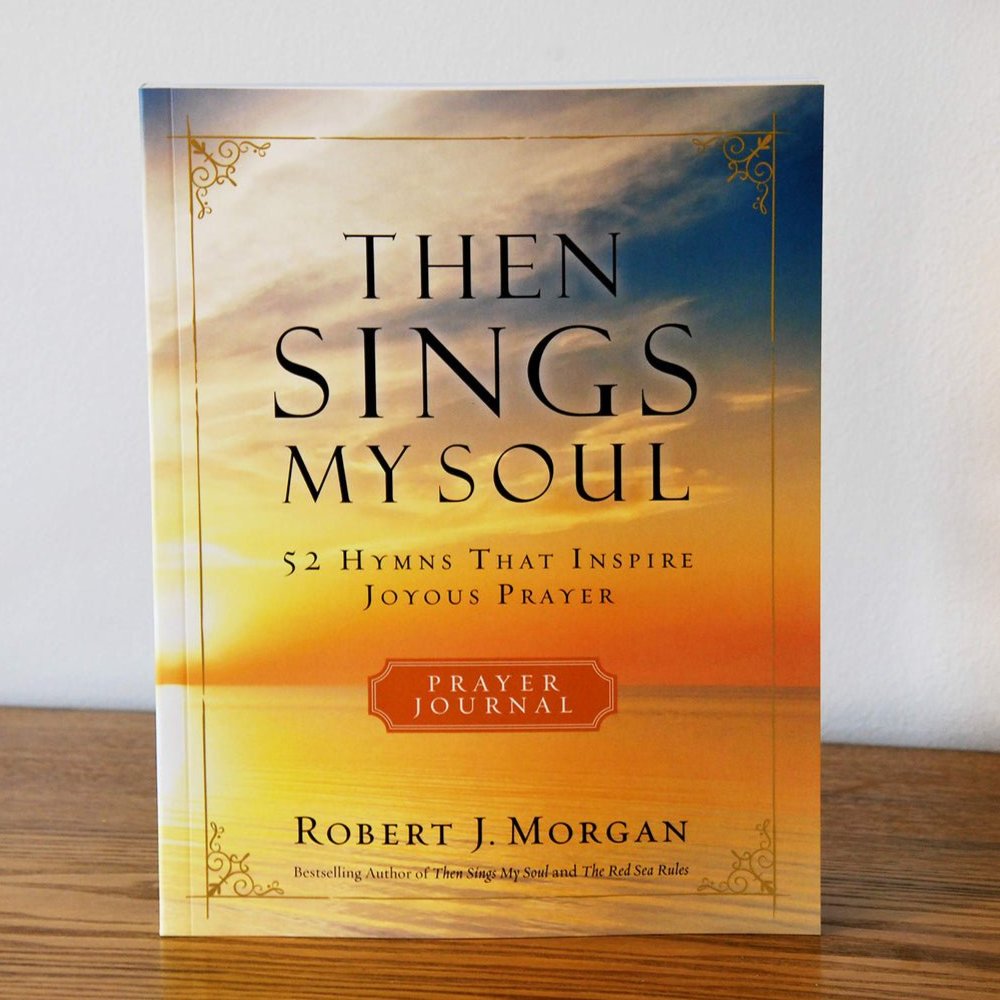
Then Sings My Soul Prayer Journal
|
|
|
100 Favorite Hymns Devotional
|
|
|
|
The Lie You Don't Know You Believe
Online Bible Study
|
The Lie You Don't Know You Believe Online Bible Study
|
Are you burdened by a quiet voice that says you're helpless, unlovable, or worthless?
In The Lie You Don't Know You Believe Bible study, Jennie Allen defines the three core lies that distort our identities and influence our decisions. Journey with her into Matthew chapter 4, where Jesus faced the enemy’s temptations and revealed a decisive truth: God’s Word holds the power to silence every lie that comes against us.
Join The Lie You Don't Know You Believe Online Bible Study and get access to six teaching videos and other helpful tools—all FREE when you sign up!
|
|
|
|
this devotion with someone who needs it today
|
|
|
|
*Sale price ends on 05/31/26 at 11:59 PM. Free Standard Shipping for U.S. orders over $35 excluding Alaska and Hawaii.
*Offers valid until May 20, 2026, at 11:59 p.m. CST or while supplies last. Offer valid online and by phone only. Shipping, gift cards, or customization of products does not qualify towards minimum purchase requirements. Receive $5 off $35+ with code GET5 at checkout or $10 off $50+ with code GET10 at checkout. Offer only available to customers in the United States age 18 and older. To redeem offer, enter promo code during online checkout or provide the code to a representative during phone orders. Cannot be redeemed for cash or combined with any other discount offer. FaithGateway reserves the right to de-activate the promo code in the event of fraud or technical issues and limit quantities of individual items eligible for purchase with this discount. Void where prohibited, taxed or restricted by law. Not valid for resale.
|
|
|
|
|










No comments:
Post a Comment